In Memoriam
Jane Campbell Hutchison (1932–2020)
by Andrew Stevens
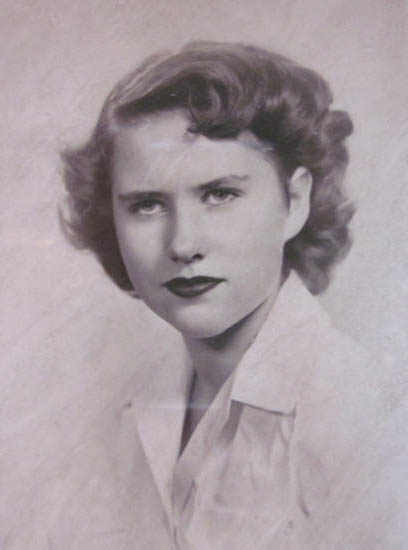
Jane Campbell Hutchison is best known by those interested in the prints of Germany and the Low Countries for her work on the Housebook Master and her biography of Albrecht Dürer. On the University of Wisconsin campus, she was respected for these and her other historical endeavors, but also known for her cleverness and quick tongue. She brought her command of the history of art and her witty observations to nearly five decades of appreciative students, and Jane herself felt keenly that her legacy resided largely in those whom she had taught.
In 2006, she discussed her long career as a student and a professor at the university during the course of a series of talks with Robert Lange for the University of Wisconsin’s oral history project; the quotations that follow are drawn from these 34 hours of recordings. She discusses in some depth her life before coming to the university and then her career there as a doctoral student and later a professor. Throughout, she evokes a busy life foliated with teachers, colleagues, and students who supported, challenged, perplexed, and delighted her, and on whom she left an indelible imprint.
Jane earned her MA in art history at Oberlin College in 1958 and her PhD from the University of Wisconsin–Madison in 1964, supervised by Wolfgang Stechow and James Watrous, respectively. She would later dedicate her first monograph on the Housebook Master to Stechow and her biography of Dürer to Watrous. While at the University of Wisconsin, she received a Fullbright Fellowship, studying in Utrecht at the Rijksuniversiteit with Jan Gerrit van Gelder and at the Kunsthistorisches Institut with Karel G. Boon.
She remarked that the students in Utrecht would gather tulip and hyacinth blossoms from country roadsides where they had been left as trash after the annual mass lopping by bulb farmers. The huge piles of disembodied blooms that decorated her fellow students’ spring parties gave Jane some insight into the exuberant central panel of Hieronymus Bosch’s Garden of Earthly Delights. She also fondly recalled the finale to her studies at the Kunsthistorisches Institut: her initiation into “the ritual pouring of a glass of wine over the head of a bust bearing the club’s motto Se non è vero, è ben raccontato (Even if it isn’t true, it’s well conceived).”
At the completion of her PhD, she continued her career in Madison teaching popular classes in Northern Renaissance and Baroque paintings. When asked by her interviewer why the course she instituted covering seventeenth-century Dutch and Flemish art was “wildly popular,” Jane replied, “It’s great painting!” (at which point this auditor had a clear vision of the raised eyebrow that habitually accompanied such pronouncements).
Jane’s early years teaching in Wisconsin coincided with the campus unrest in the 1960s. “For three years, pretty much, there was a cloud of tear gas around here. Tear gas is heavy, and at the end of the day, it would roll down hill and go right into the air conditioner of my apartment. . . . You always went out in the morning with a large handkerchief that you could dip into the fountain and put over your nose and mouth to get where you were going, and did the same to get back home again.” However, she recalled not only the horrors of the times but the revelations. For example, Hans Gustafson, a Lutheran minister who was in one of her first graduate seminars, wrote a paper observing that Dürer conveniently left Nuremberg just when it became public that not only Martin Luther but also Lazarus Spengler and Willibald Pirckheimer were to be named in the papal Exsurge Domine that threatened them with excommunication. Jane examined this connection in greater detail in her biography of Dürer and duly thanked Gustafson decades later, one of dozens of her students whose art historical careers she cites in the course of her narrative.
When asked whether it wasn’t daunting to turn to the life of Dürer, with its mountain of associated literature, after having concentrated on the less well-documented Housebook Master, she observed, “When you’ve spent your life writing about a guy with no name, no widow, no papers, nothing, it was such a relief, I cannot tell you, to have a real person in his own words telling you what he thought.”
Regarding her contribution to The Illustrated Bartsch series, her typically droll summary was that she went “around rooting through the collections of the great print rooms mostly in Germany and Austria,” a laborious, but attractive project. When she was approached by series editor Walter Strauss about the project, she asked what she would be doing. Strauss suggested volume 6, which, he noted, included Martin Schongauer. Jane enthusiastically assented, then went downstairs to the art history library to look at the volume in the old, unillustrated series and was overwhelmed to find that “everybody’s in there: Martin Schongauer, everybody who just had initials and did three things and had a heart attack. Wenzel von Olmütz was in there; Master E. S. is in there. It’s just a nightmare. I’m still not through with it. . . . I spent almost every summer in the ’80s and some in the ’90s, too, going to Europe and poking around in people’s print rooms. . . . It was a big nuisance but a lot of fun.”
Throughout her career, Jane dutifully fulfilled her responsibility to serve on the committees every department is governed by. In addition, she participated in important university committees, often as the first woman to be on them. She regularly attended “the meat market,” her term for the candidate interview segments of the College Art Association, finding in all these commitments points of annoyance as well as allies to work with. (Members of the Print Council of America may be secure in the knowledge that ours was, for her, “the one meeting I enjoy going to.”)
In the heartfelt memorial published in the newsletter of the Historians of Netherlandish Art, her friend and former student Marsely Kehoe observed: “When I recall the details of Pieter Bruegel’s Netherlandish Proverbs, I hear each proverb in Jane’s voice and cadence, and my students’ enjoyment of the painting is due to her influence.” Her voice will be missed, but it continues to echo.